What Hearing Healthcare Services Do We Offer?
Looking after your hearing is an important part of your overall health and wellbeing. We provide a range of professional


However, that doesn’t mean they are completely waterproof. Taking the right precautions and knowing how to dry your hearing aids properly can help keep them working at their best and extend their lifespan.
Modern hearing aids are designed with protective technology that helps prevent water and moisture from reaching their sensitive internal components. Many models have an IP (Ingress Protection) rating, which indicates how well they are protected against dust and moisture.
This means that being caught in a light rain shower doesn’t necessarily mean your hearing aids will be damaged. However, prolonged or significant exposure to water can still cause problems, particularly if moisture gets inside the device.
Sweat and humidity can also affect hearing aids over time, so it’s important to take care of them even if you haven’t been caught in heavy rain.
If your hearing aids do get wet, don’t panic. There are several ways you can safely remove moisture and help protect your devices.
An electronic hearing aid drying box is one of the easiest and most effective ways to remove moisture from your hearing aids.
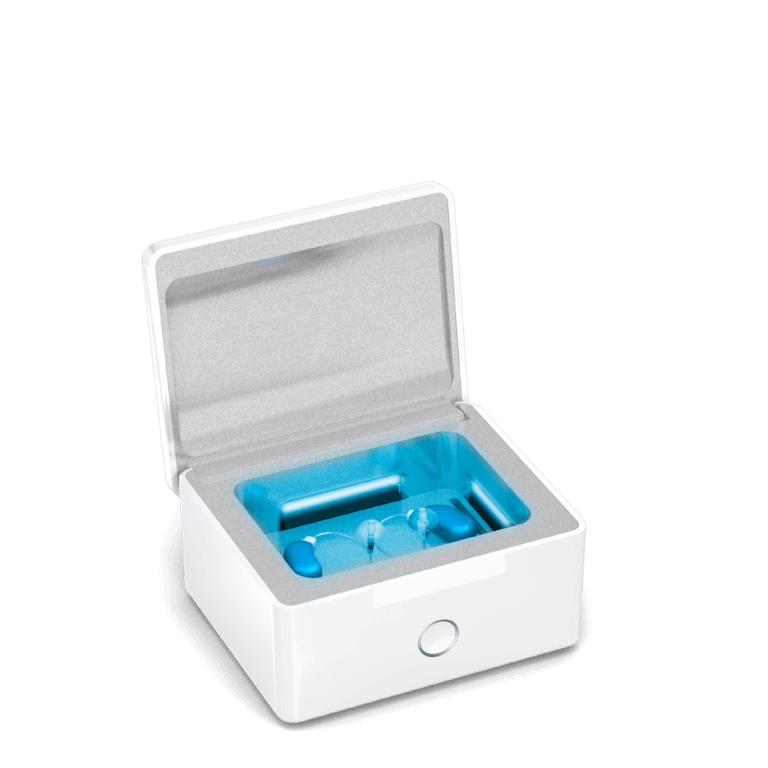
An example of a hearing aid drying system.
Drying boxes use a combination of airflow and controlled heat to help dry hearing aids. They are available for different types of devices, including both rechargeable and battery-powered hearing aids.
If you use battery-powered hearing aids, simply place them in the drying box and start the drying cycle. Depending on how much moisture the hearing aids have been exposed to, the drying process can take anywhere from around 45 minutes to several hours.
Many drying boxes designed for rechargeable hearing aids can also charge the devices at the same time. This makes them particularly convenient for overnight use, as your hearing aids can be dried and recharged simultaneously.
Some models also incorporate UV light, which can provide an additional sanitising function while your hearing aids are being dried.
If your hearing aids have been exposed to significant moisture, for example, during a heavy rainstorm or if they have accidentally been worn in the shower, it’s best to dry them as soon as possible rather than waiting until bedtime.
If you’d prefer a non-powered alternative, a hearing aid dehumidifier or desiccant can be a useful alternative.
Desiccants are designed to absorb moisture and are available in several forms, including pellets, discs and drying linings. They can be particularly useful when travelling or camping, where access to an electrical outlet may be limited.
They are also relatively inexpensive and are widely available online and from pharmacies or hearing care providers.
Hearing aid technology has advanced considerably, and some modern devices offer a high level of water resistance.
For example, the Phonak Lumity Life range was designed to offer enhanced protection against water and sweat. Depending on the specific model and manufacturer’s guidance, certain hearing aids can withstand significant water exposure.
It’s important to check the water-resistance rating and manufacturer’s instructions for your particular hearing aids rather than assuming that all devices are waterproof.
Even hearing aids marketed as highly water-resistant should not automatically be treated as suitable for swimming, showering or submersion unless the manufacturer specifically states that they are.
A few simple habits can help protect your hearing aids from rain, sweat and humidity:

Don’t panic if you get caught in the rain wearing your hearing aids.
If your hearing aids get caught in the rain, the most important thing is not to panic. Remove them from the source of moisture and gently dry the outside with a soft, dry cloth.
If possible, place them in a hearing aid drying box or dehumidifier. Avoid exposing them to direct heat, such as a hairdryer or radiator.
If your hearing aids continue to malfunction after they have been thoroughly dried, contact your hearing care professional. They can assess the devices and advise whether further cleaning, servicing or repair is required.
Although modern hearing aids are designed to cope with everyday conditions, regular hearing aid care and maintenance can make a significant difference to their performance and longevity.
Keeping your hearing aids clean, protecting them from unnecessary moisture and drying them correctly after exposure to water can help them continue working effectively for longer.
If you’re unsure about how to care for your hearing aids, or you’d like advice on choosing a suitable drying system, don’t hesitate to get in touch with our team. We’re always happy to help you look after your hearing aids and get the best possible performance from them.
Looking after your hearing is an important part of your overall health and wellbeing. We provide a range of professional

Hearing loss is a common part of ageing, but that doesn’t mean you have to let it affect your quality
Hearing loss develops gradually for many people and can range from mild to profound. Each level affects hearing differently and